BBQ Smoking Recipe Book & Grill Experiment Tracker: A Comprehensive Evaluation for Backyard Cooks
For dedicated barbecue enthusiasts, every smoking session is a learning opportunity. Whether you’re chasing the perfect bark on a brisket or refining a championship rib recipe, keeping detailed records can be the difference between a one-hit-wonder and consistently outstanding results. The BBQ Smoking Recipe Book enters the scene as a dedicated logbook designed to help you track your barbeque grilling experiments—including the meat, method used, rubs and marinades, and the overall outcome—along with a space to rate the experience and take process notes. This article takes a practical, even-handed look at what the book offers, who stands to benefit most, and where it might fall short for certain users.
What Exactly Is the BBQ Smoking Recipe Book?
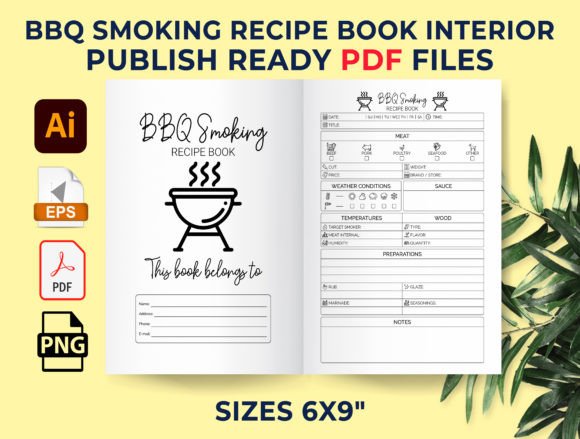
At its core, the BBQ Smoking Recipe Book is a 120-page printed journal, formatted at 6” x 9” inches with no bleed. It uses a per-day layout, meaning each cook session gets its own dedicated page or spread to log details. The content is structured to prompt you to record the meat or protein, the smoking or grilling method (offset, pellet, charcoal, etc.), the rub and marinade combinations used, plus the overall outcome—flavor, texture, doneness—and a space to rate your grill experience. Additional room for notes lets you capture weather conditions, timing tweaks, or lessons learned the hard way.
The interior pages are designed with a “simple tracking” philosophy, making the log lightweight enough to fill out while your pork shoulder rests, yet detailed enough to serve as a reference a year later. The book is delivered as a high-quality print-ready PDF at 300 DPI, along with AI, EPS, and PNG source files. It has been KDP tested, meaning it’s formatted to pass Amazon’s Kindle Direct Publishing checks without errors, though it’s primarily a physical journal you can print at home or through a print-on-demand service.
Who Might Be Interested in a Dedicated Smoking Log?
If you’ve ever stood by your smoker with a greasy phone, trying to type notes into a generic notes app, you already know the friction. The appeal of a structured, printed journal is in its simplicity and focus. This book might resonate with:
- Backyard experimenters who frequently try new woods, rubs, or techniques and want to remember what worked.
- Competition cooks who need to track minor tweaks across multiple test runs to replicate results under pressure.
- Beginners looking to build a personal reference library of what they’ve learned, rather than relying on scattered memory.
- Gift buyers seeking a useful, niche item for the grilling enthusiast who already owns every gadget.
It’s less about teaching you how to smoke—it’s not a recipe book filled with pre-made instructions—and more about capturing your recipes and processes as they evolve. That distinction is important when evaluating its place in your toolkit.
Key Tracking Capabilities and Layout
The per-day format is arguably the book’s strongest functional asset. A typical entry might look something like this: you jot down the meat (e.g., “beef plate ribs”), method (“offset smoker with post oak”), rub (“50/50 salt & pepper plus a tablespoon of espresso chili powder”), marinade (“none”), and then after the cook, you fill in the outcome (“pull-apart tender but slightly oversalted on the bark”). A simple rating—stars, a score, or a qualitative badge—gives you an at-a-glance filter when flipping through past cooks.
The dedicated space for process notes means you can also log pre-heat times, wrap decisions, spritz intervals, and temperature graphs if you’re so inclined. This transforms the book into a living document. Over a summer, you build a personal playbook that’s tailored to your equipment and taste preferences. Because the design emphasizes “simple tracking,” it avoids over-complication; you won’t find forced fields for every minute variable, which can feel bloated in some competitor journals.
Benefits of Using a Physical Journal Over Digital Options
Many seasoned pitmasters will reach for a phone to snap photos and jot timestamps, but digital logs come with their own baggage. Screen glare in direct sunlight, greasy fingerprints, dead batteries, and the constant temptation to check notifications are real distractions when you should be monitoring fire management and meat temperature. A physical journal like the BBQ Smoking Recipe Book:
- Stays right beside your cooker, no power needed.
- Allows quick handwriting without app navigation.
- Becomes a tactile, chronological archive you can flip through while planning your next cook.
- Easily shares with a cooking partner or a new owner of the same smoker if you ever pass down your gear.
There is also a psychological benefit: the physical act of writing reinforces memory, which may help you internalize lessons faster than tapping on glass.
Tradeoffs and Practical Considerations
No product fits every workflow, and this journal is no exception. Here are some honest limitations to weigh:
- Size and durability: At 6” x 9”, it’s portable but still a bound book. Protecting it from rain, sauce spills, or charcoal dust may require a zip-lock bag or a dry spot on a nearby table. The pages are standard paper, so repeated exposure to moisture could cause issues—fine for careful cooks, less ideal for messy conditions.
- No bleed interior: The design is intentionally no-bleed, meaning the page layout stays within borders. This is excellent for clean printing but may feel a bit restrictive if you love sketching pit diagrams or doodling firebox layouts.
- Print-on-demand nature: Since it’s delivered as digital files (PDF, AI, EPS, PNG), the actual physical book quality will depend entirely on your printer, paper choice, and binding method. Budget print jobs might yield less satisfying results than a professionally bound pre-printed purchase from a bookstore. You’ll need to be comfortable with a bit of DIY or have access to a reliable print service.
- No digital companion: There’s no mention of a mobile app or cloud sync; if you prefer having a searchable database of past cooks, you may miss filtering by meat type or rating without manually indexing pages.
- 120 pages: That’s roughly 120 cook sessions (assuming one per page). For a heavy user who smokes multiple times a week, you could fill this in a year or less. For a casual weekend warrior, it’s a solid two- to three-year companion. However, there is no templated way to expand or add pages once full unless you buy/print another copy.
When This Logbook Is a Strong Fit
If your goal is deliberate practice—treating each smoke like an experiment with controlled variables—this journal aligns exceptionally well. It’s particularly effective for:
- Learning a new smoker: Breaking in an offset or mastering a vertical pellet unit? Recording fuel consumption, vent positions, and ambient temp fluctuations will shorten your learning curve dramatically.
- Developing signature rubs and sauces: When you’re tweaking ratios, you need a repeatable log. The structured fields keep your trials organized.
- Season-long documentation: Holiday briskets, summer rib fests, tailgating wings… a chronological record helps you see seasonal patterns and preferences.
- Sharing recipes with family: Handwritten notes in a uniform format make it easy to photocopy or gift to someone inheriting the family smoker tradition.
Because it’s KDP-tested, you can even print multiple copies through Amazon for a professional-looking paperback, which appeals to those who want a keepsake-quality journal without sourcing their own binding.
Situations Where Alternatives May Be More Suitable
Not every cook needs a formal journal. You might consider alternatives or pass on this book if:
- You prefer a fully digital, cloud-based log that you can share in real time with a cooking team, complete with photo uploads and temperature graphs. Apps like Smoke Log or custom spreadsheets can handle this workflow with better search and data analysis.
- You’re a minimalist who only smokes once a month and remembers every detail without written aid. In that case, the journal may collect dust.
- You want a pre-bound, high-end leather logbook that arrives ready-to-use without printing. The digital delivery model means you’re buying a design, not a finished physical product. If you value the tactile experience of a premium pre-printed notebook with embossing, you might be disappointed unless you invest in quality print finishing yourself.
- You require highly specialized tracking—such as meat injection details, brine temperatures, multiple probe placement logs, or integrated cook timers. The “simple tracking” approach may feel too basic for competition-level granularity, though you could always expand notes in the blank space; it just won’t have dedicated fields.
Print Quality, KDP Compatibility, and File Flexibility
One practical advantage highlighted in the product description is the 300 DPI high-resolution output and the variety of file formats. This matters because:
- The crisp, clear print quality ensures that even small text fields remain legible, reducing eye strain when reading back over old entries.
- With AI and EPS files, users can make minor customizations—such as adding a family logo, adjusting margins for a specific binder, or translating prompts into another language—before printing. That’s a level of flexibility not commonly found in off-the-shelf paperbacks.
- KDP compatibility means if you choose to sell or distribute printed versions (for a BBQ club, for example), you can confidently upload to Amazon without resubmission errors. This is a nice bonus for those who run workshops or want to gift branded copies.
Keep in mind that no-bleed design often simplifies printing on a wide range of home printers, but if you want edge-to-edge color on the cover (assuming it’s included in files), you’ll need to check that separately. The intro page, while a small touch, gives the journal a polished start if you’re printing it as a formal book.
Making the Decision: Is This Your Smoking Companion?
The BBQ Smoking Recipe Book fills a niche between a blank notebook and a hyper-structured log. Its value lies in removing the friction of creating your own template, while still allowing enough breathing room for personalization. For $10–$15 (typical for downloadable printable journals), it’s a low-risk investment that can pay off quickly if you’re serious about improving consistency.
Before deciding, honestly assess your own habits. If you already keep a weather-spotted spiral notebook full of sticky notes and you daydream about a cleaner system, this book will likely feel like an upgrade. If you’ve never written down a smoking session and your results vary wildly each time, starting with any consistent logging habit—even a free template—will be more beneficial than worrying about the tool itself. However, if you want a ready-made design that looks neat enough to leave on the coffee table and encourages daily discipline, the BBQ Smoking Recipe Book and its simple tracking approach is well worth the print cost.
Remember, the ultimate measure isn’t the book itself, but the record of your cooking journey it helps you create. Whether you choose this logbook, a digital app, or a repurposed day planner, the key is to start capturing those smoky experiments so you can repeat the wins and rarely repeat the mistakes.