Rethinking Content Creation: How Crossword 34 Reflects the New Wave of Modular KDP Publishing
The intersection of traditional pastimes and modern entrepreneurial tools has rarely been more promising. In the vast ecosystem of Amazon Kindle Direct Publishing, where low-content and activity books generate millions in annual revenue, a quiet revolution is underway. Creators are no longer restricted to designing every puzzle from scratch. Instead, they are turning to refined, ready-to-integrate assets that dramatically accelerate production while maintaining quality. One such asset that encapsulates this shift is Crossword 34. Far more than a single grid of intersecting words, it serves as a case study in how micro-products are reshaping the publishing landscape for freelancers, marketers, and creative entrepreneurs alike.
The Enduring Allure of Crossword Puzzles in a Digital Age
Before examining the strategic value of a specific puzzle interior, it is worth appreciating why crossword puzzle books remain a cornerstone of the low-content market. In an era of infinite scroll and algorithmic attention capture, crosswords offer something increasingly rare: a screen-free zone of focused cognition. They sit at the nexus of entertainment, education, and mindfulness. For adults, they represent a daily ritual that sharpens vocabulary and pattern recognition. For children, they reinforce spelling and logical thinking in a playful format. This dual demographic appeal makes crossword books remarkably resilient, capable of selling year-round, not just during seasonal spikes like holidays or summer breaks.
The data supports this. Publishing analytics consistently show that puzzle books—including word searches, Sudoku, and especially crosswords—maintain strong search volume on Amazon. But popularity also brings saturation. The challenge for any new publisher is differentiation. Simply slapping a generic cover on a collection of unoriginal puzzles no longer yields results. The market has matured, and consumers now evaluate books based on the perceived quality of the interior experience as much as the cover art. This is precisely where a thoughtfully crafted element like Crossword 34 becomes strategically important.
Understanding Crossword 34 and Its Role in Modern Content Creation
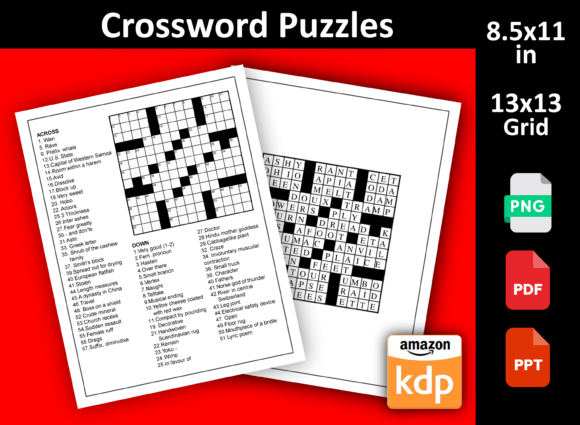
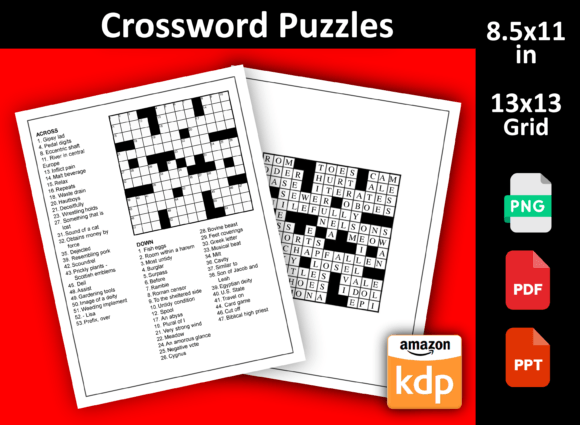
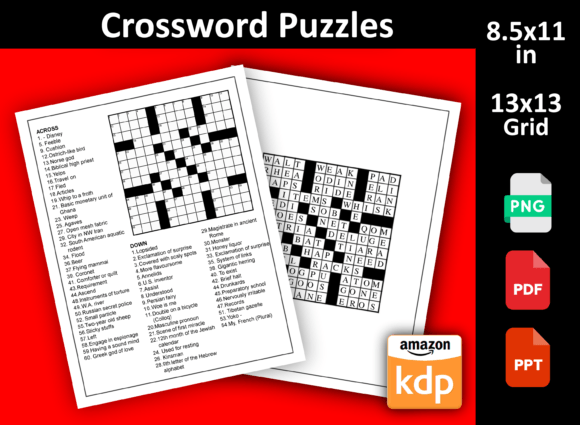
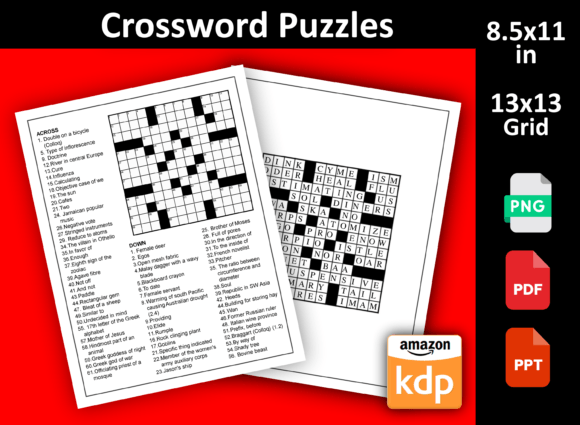
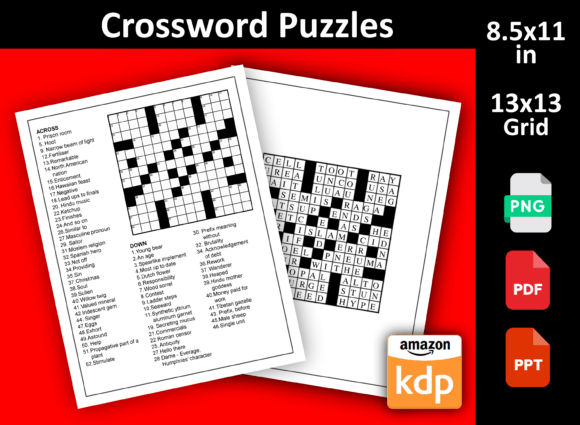
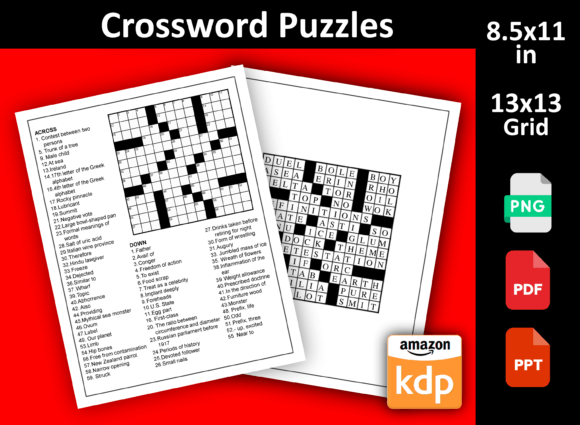
At its core, Crossword 34 is a meticulously prepared digital product—an American-style crossword puzzle and its accompanying solution, formatted for print on 8.5 x 11-inch pages with no bleed. The grid is 13 by 13, placing it in that sweet spot between accessible daily puzzles and the intimidating Sunday challenge. Pitched at an intermediate to hard difficulty level, it targets an audience that finishes simpler puzzles too quickly and craves a more satisfying cognitive workout. Crucially, the package includes source files in PDF, PPTX, and PNG formats, making it immediately usable across a variety of design workflows.
What Makes This Specific Interior Stand Out
The significance of this one puzzle lies less in its isolated clues and more in what it represents: a modular building block for a larger product. The American-style grid, with its dense interlocking and symmetrical layout, adheres to conventions that seasoned solvers expect. The unique design ensures that when mixed with other puzzles, the overall book feels fresh and professionally crafted, not like a repetitive template. For a creator, this eliminates the arduous task of constructing a well-balanced crossword from scratch—a process that requires not only vocabulary breadth but also an artistic eye for grid symmetry and a technical understanding of word intersection rules.
The Amazon KDP Opportunity: Beyond Passive Income
Amazon KDP has democratized publishing to an extraordinary degree. The conversation, however, often gets stuck on the notion of passive income—upload a book and watch the royalties trickle in. Professional creators know that sustainable revenue requires treating KDP not as a lottery but as a scalable content business. In that model, efficiency is paramount. Time spent designing a single puzzle could instead be invested in market research, keyword optimization, cover design iteration, or building an audience off-platform.
By utilizing a finished puzzle interior like Crossword 34, an entrepreneur can compress the production timeline for a full-length puzzle book from weeks to days. The workflow transforms from puzzle creation to puzzle curation and arrangement. Because the provided files are print-ready and adhere to a standard 8.5 x 11 inch format without bleed, they can be dropped directly into a book template alongside other curated puzzles. The inclusion of PPTX and PNG files also allows for easy insertion into software like PowerPoint or Canva for branding and page numbering, catering to non-technical creators who prefer visual editors.
Why Ready-Made Puzzle Interiors Are Disrupting Low-Content Publishing
The broader industry trend here is the unbundling of creative labor. Just as stock photography separated image creation from graphic design, and font libraries separated typeface design from publishing, we are now seeing the rise of specialized micro-assets. A single crossword puzzle like Crossword 34 is not merely a product; it is a raw material for product assembly. This shift aligns with the growing maker–producer spectrum: individuals who excel at marketing and audience building can now gain access to high-caliber content without having to master the intricate craft of crossword construction.
This trend is amplified by the changing expectations of the Amazon customer. Reviewers are quick to spot low-effort books filled with repetitive grids, awkward clues, or formatting errors. A book that combines handcrafted, unique puzzles—even if those puzzles were sourced from different professional designers—delivers a superior customer experience. The pitch is clear: mix and match with another volume of crosswords to make your book unique and stand out. That phrase encapsulates a nimble business strategy. Instead of publishing a single batch of 50 identical-looking puzzles, a creator can curate a blend of 50 distinct puzzles, each with its own design provenance, resulting in a book that feels organic and rich.
Strategic Mix-and-Match: Building Unique Books That Sell
Consider a practical scenario. A KDP publisher wants to launch a “Brain Training for Seniors” series. They can use Crossword 34 as the centerpiece challenging puzzle in each volume, surrounding it with medium-difficulty puzzles from other sources to create a gradual difficulty ramp. Because the 13x13 grid and American style are clearly defined, the publisher can ensure all puzzles in the book share a coherent visual language, even if they originated from different designers. The provided solution page also maintains that coherence, offering a consistent “answers” section at the back of the book.
Another approach is niche layering. Suppose a publisher targets travel-themed activity books. They could take Crossword 34 and, using the PPTX file, add a subtle travel-themed border or integrate the puzzle into a section titled “Airport Brainteasers.” This adaptability is why multiple file formats matter. The PDF ensures exact print fidelity, while the PPTX and PNG open doors to light customization without requiring advanced software skills. This blend of ready-made quality and flexible adaptation is precisely what modern digital product buyers value most.
The Business Mechanics: From Interior to Income
The economics are straightforward but often overlooked. On KDP, a well-designed crossword puzzle book can sell for $5.99 to $9.99 in paperback, with print costs for a 100-page black-and-white interior running low. Royalties after printing costs on a $7.99 book can range from $2 to $3 per copy. If a publisher can produce such a book in under a day by assembling ten or twenty pre-made puzzles like Crossword 34, the return on time investment becomes highly attractive. The real leverage comes from taking that saved time and reinvesting it into activities that multiply exposure: Amazon Advertising campaigns, building an email list, or creating a series of interconnected puzzle books that cross-promote each other.
From One Puzzle to a Full Brand
Entrepreneurship in the KDP space is increasingly about brand building, not just one-off product drops. A single well-constructed puzzle can serve as a gateway. A creator might initially publish a “Mixed Puzzle Book” featuring Crossword 34 among other puzzle types. Based on customer feedback and sales data, they can then spin off an entire crossword-focused series, using the same high standards set by that initial 13x13 American grid. This iterative, data-driven approach is the opposite of speculative design. It relies on real demand signals, and the initial investment in ready-made interiors minimises the cost of testing the waters.
Aligning with Consumer Trends: Mindfulness, Brain Training, and Unplugging
The resurgence of analog puzzles is not accidental. Consumer behavior experts point to a widespread desire for digital detox experiences. Adult coloring books paved the way, and now puzzle books are riding the same wave of mindfulness-driven consumerism. A crossword puzzle offers a rare state of flow—a period of immersive concentration that stands in stark contrast to the fragmented attention of social media. Publications like The New York Times have capitalized on this by turning their crossword into a subscription service, but there remains a massive audience that prefers a physical book format they can carry to a café or keep on their nightstand.
An intermediate-to-hard puzzle like Crossword 34 feeds this need for deep engagement. It is not a throwaway activity; it demands time, thought, and the occasional consultation with a dictionary. Consumers perceive this as added value. They are not just buying paper and ink; they are buying a meaningful cognitive experience. For a KDP publisher, this means that a book containing a collection of such thoughtfully calibrated puzzles can command a premium price point and attract more loyal, repeat customers.
Future-Proofing Your Publishing Portfolio with Versatile Assets
Looking ahead without speculation, the trajectory is clear: the low-content publishing niche will continue to professionalize. The days of blurry interiors and hastily copied puzzles are numbered as Amazon’s review algorithms and customer expectations evolve. Creators who build a portfolio of high-fidelity, versatile assets position themselves ahead of inevitable quality thresholds. A product like Crossword 34, with its no-bleed specifications and standard trim size, is designed to be future-compatible. Even if a publisher decides to shift from Amazon KDP to another print-on-demand platform like IngramSpark, or bundle digital downloads on Etsy, the same files serve multiple sales channels.
Moreover, this modular approach encourages a more disciplined creative process. Instead of facing the blank page, the publisher starts with a proven element and asks, “How can I curate a collection that tells a story or serves a specific reader need?” The answer might lead to a book of “Classic Sunday Crosswords,” a “Road Trip Crossword Challenge,” or a “Mind Gym for Executives.” Each concept can be executed with speed and consistency because the foundational puzzle interiors are already professionally finished and aligned with American crossword standards.
In essence, the conversation around puzzle publishing has shifted from creation to orchestration. The value lies in understanding the target reader, assembling a cohesive experience, and marketing it effectively. Crossword 34 is one note in a wider symphony, but it is a note that resonates with the exact frequency the market demands: original, challenging, and elegantly formatted. For the entrepreneur who recognizes that time is the scarcest resource, such assets are not just shortcuts; they are instruments of strategic advantage. They allow the creator to focus on the architecture of the book—the sequence of puzzles, the editorial voice, the cover design that converts browsers into buyers—rather than spending endless days on the pixel-level details of grid construction.
Ultimately, the popularity of crossword puzzle books among kids and adults is not a fading trend. It is a cultural constant that has simply adopted a new economic wrapper. By blending the timeless appeal of the American crossword with the modern efficiencies of digital product distribution, forward-thinking creators are building sustainable income streams on KDP. And in that endeavor, a well-made 13x13 puzzle, complete with its solution and presented in a format ready for assembly, is far more than a page in a book—it is a small but powerful engine of commercial creativity.