Crossword 40: Smart Design for Puzzle Books
There is something quietly satisfying about a well-constructed crossword grid. The balanced symmetry, the crisp numbering, the way black squares carve out breathing room between words — it all comes down to intentional visual design. For independent publishers and content creators working on Amazon KDP, Crossword 40 delivers exactly that kind of polished, print-ready puzzle interior. It is not simply a list of clues and answers; it is a carefully formatted creative asset built for a smooth publishing workflow and a delightful solver experience.
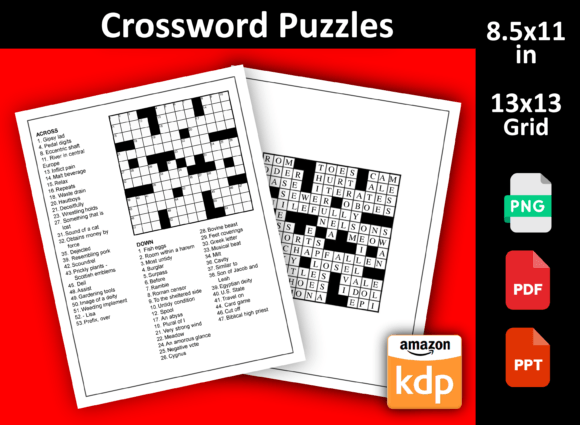
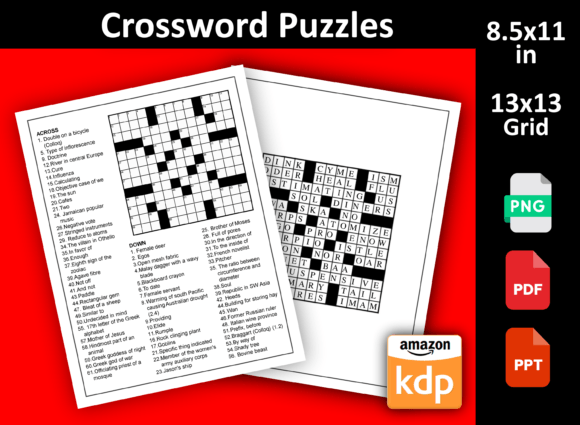
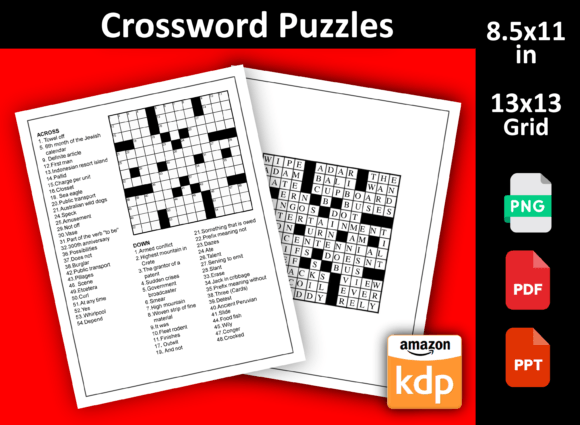
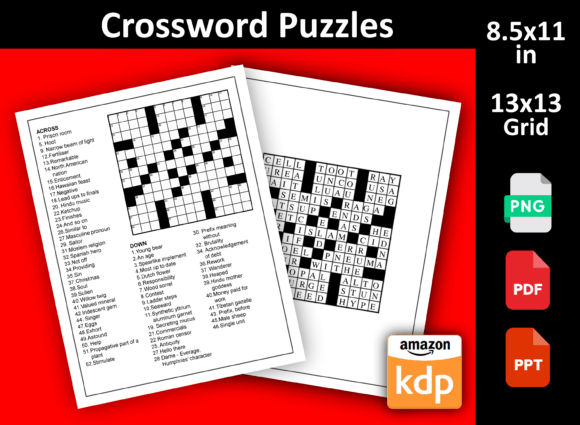
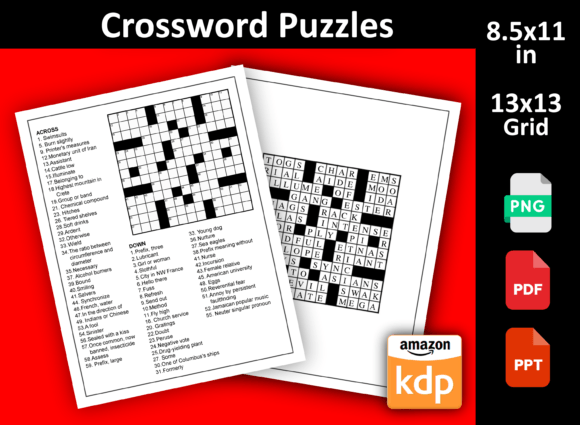
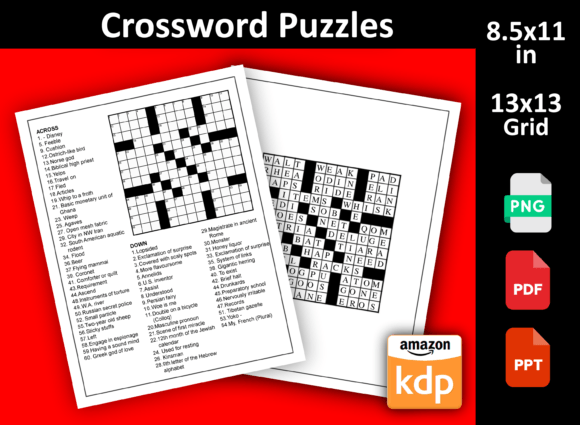
When you look at the most successful puzzle books on the market, one thing stands out immediately: consistency. Every grid sits perfectly centered on the page, the typography remains uniform, and the solution section mirrors the puzzle layout. Crossword 40 addresses this by providing an American-style 13×13 grid with an intermediate-to-hard difficulty level, formatted for 8.5 x 11 inch pages with no bleed. The interior comes as a ZIP file containing PDF, PPTX, and PNG formats, giving creators the flexibility to drop the puzzle directly into their manuscript or to mix and match with other volumes for a distinctive final product.
Why Puzzle Layout Matters in Visual Communication
At first glance, a crossword grid might seem like a purely functional element. But from a graphic design standpoint, it is a study in visual hierarchy and spatial balance. The 13×13 format used in Crossword 40 hits a sweet spot — large enough to challenge solvers without overwhelming the page. Each square must be sized for comfortable pencil or pen use, and the numbering needs to remain legible even when printed at scale.
Poorly designed puzzle interiors break trust with the user. If the grid lines are too thin, they disappear during printing. If the clue numbers are cramped, solvers grow frustrated. If the solution section is awkwardly placed, the overall user experience suffers. This is where thoughtful editorial design makes a tangible difference. Crossword 40 prioritizes readability and clean composition, ensuring that each puzzle page communicates clarity rather than clutter.
Building a Strong Brand Identity with Puzzle Books
For KDP publishers, every interior template is a building block of brand identity. Readers who enjoy your crossword books will return for more if they associate your name with quality and ease of use. A consistent visual style across your catalog reinforces that recognition. Because Crossword 40 offers a unique grid design that can be easily combined with other volumes, you can maintain a cohesive look across multiple titles while still offering variety.
Customization matters too. The included PPTX and PNG files let you adjust elements to match your color palette or add subtle branding cues. While crosswords traditionally favor black-and-white print design, small touches — a styled title header, a consistent footer, a thoughtfully chosen typeface for the clues — can elevate a generic puzzle book into a memorable product. These decisions tie directly into broader principles of branding and professional presentation.
Practical Applications Across Creative Projects
Although Crossword 40 is built with KDP publishing in mind, its uses extend further. The clean grid format adapts well to:
- Marketing materials — Add a branded crossword to newsletters, event handouts, or promotional booklets to engage your audience interactively.
- Social media graphics — A cropped section of the grid paired with a clever clue can spark engagement on Instagram or Facebook.
- Educational content — Teachers and tutors can incorporate the puzzles into worksheets, using the editable PPTX file to adjust clues for specific learning goals.
- Merchandise and print products — Beyond books, the design works for standalone puzzle pads, activity kits, or subscription box inserts.
- Digital products — The PNG format allows for seamless integration into apps, websites, or downloadable puzzle packs.
In each case, the underlying design workflow benefits from having a reliable, pre-tested asset. Instead of building a grid from scratch — aligning squares, checking symmetry, verifying number sequences — you start with a professionally constructed base and adapt it to your specific creative project.
Typography and Readability in Puzzle Design
Grid-based design demands precise typographic choices. The numbers inside each square must remain small enough to leave room for letters yet large enough to read without squinting. Crossword 40 pays attention to this balance. The numbering follows a logical flow that experienced solvers expect, creating a seamless interaction between the solver and the page. When you translate this into your final product, you preserve the rhythm that makes solving enjoyable — a rhythm easily broken by sloppy typography or inconsistent spacing.
Color, Contrast, and Print Considerations
Most crossword interiors stick to grayscale, and for good reason. High-contrast black grids on white paper ensure maximum legibility and minimize printing costs. However, the no-bleed 8.5 x 11 inch format of Crossword 40 gives you freedom to design covers and supplementary pages with full color palette expression without affecting the puzzle area. This separation between interior constraint and cover creativity is a hallmark of smart packaging design — the outside draws attention, the inside delivers a focused, distraction-free experience.
Scaling Your Publishing with Design Consistency
One of the quiet advantages of using a template like Crossword 40 is scalability. Once you have your book layout established, duplicating the process for future volumes becomes significantly faster. Your design workflow evolves from one-off creation to systematic production. You can release seasonal editions, themed collections, or difficulty-graded series without redesigning the core puzzle layout each time. This consistency not only saves hours of labor but also reinforces a recognizable modern aesthetic that readers come to trust.
For those blending multiple puzzle types, the mix-and-match flexibility cannot be overstated. Pairing Crossword 40 grids with word searches, Sudoku, or logic puzzles creates a varied activity book. Because the crossword interior follows standard dimensions and clean formatting, it integrates smoothly alongside other well-designed creative assets. The result is a cohesive book that feels curated rather than cobbled together.
What Makes a Puzzle Interior a Valuable Design Asset
Evaluating a puzzle interior goes beyond counting clues. You want to consider scalability — does the grid maintain its integrity when printed at different sizes? You look at compatibility — do the file formats work with your existing design software like Adobe InDesign, Canva, or PowerPoint? You assess audience expectations — does the difficulty level match what your readers seek? Crossword 40 addresses all three by delivering a proven grid layout in widely accessible formats at an intermediate-to-hard challenge level that appeals to a broad solver base.
Thoughtful design choices at the asset level ripple outward into every customer interaction. A solver sitting down with your book does not consciously notice the margin widths or the grid alignment, but they absolutely feel the difference between a cramped, inconsistent layout and a spacious, professionally finished page. That feeling shapes reviews, repeat purchases, and word-of-mouth recommendations — the lifeblood of independent publishing.
Investing time in selecting quality puzzle interiors pays dividends in both the short and long term. Whether you are publishing your first crossword book or expanding a thriving catalog, the visual integrity of each page matters. By starting with a resource like Crossword 40, you give yourself a strong foundation — a grid that balances challenge with clarity, a layout that respects the solver's experience, and a design that communicates care from the first clue to the final solution.