Nonogram Puzzle Interiors: Mastering 100 Logic Puzzles on a 10×10 Canvas
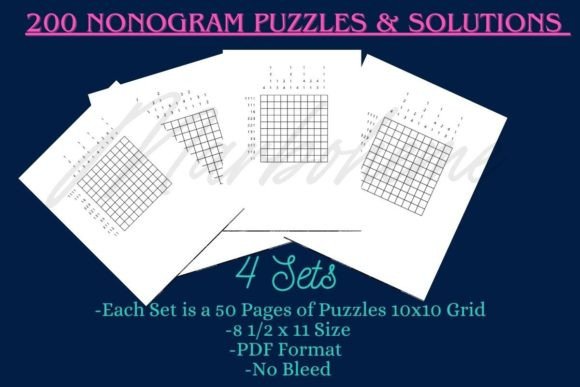
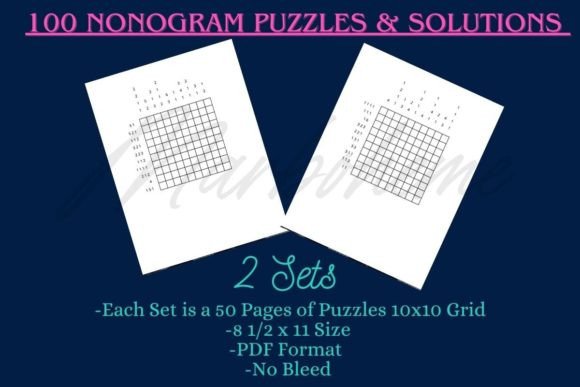
Logic puzzles have long provided a satisfying bridge between relaxation and intellectual engagement. Among the most visually rewarding of these challenges is the nonogram—a picture-forming puzzle that blends numerical deduction with pixel art. The Nonogram Puzzle Interiors-100 Puzzles collection revitalizes this classic pastime by delivering exactly one hundred carefully crafted 10×10 grids. Each puzzle invites solvers to decode a hidden interior image, one cell at a time, using only the number clues that border every row and column. Far more than a casual distraction, this set of puzzles offers a structured journey through pattern recognition, logical sequencing, and creative revelation.
Why the 10×10 Grid Defines the Sweet Spot
The 10×10 dimension is far from arbitrary. It occupies a remarkable middle ground where puzzles are substantial enough to demand genuine concentration yet compact enough to complete in a single sitting. Smaller grids often feel like warm-ups; larger canvases can become endurance tests. At 10 squares wide and tall, each puzzle in Nonogram Puzzle Interiors-100 Puzzles requires roughly five to fifteen minutes of sustained logical effort. This makes the collection exceptionally versatile—slip a sheet into a morning coffee ritual, use it as a screen-free lunch break activity, or solve several in a row during a quiet evening. The portable nature of the PDF format, scaled perfectly for standard 8.5×11-inch paper, means you can print a fresh page whenever curiosity strikes.
Picture Logic Without a Brush: How the Numbers Paint
The fundamental principle behind every nonogram is deceptively simple yet deeply layered. Along the top of each column and the left side of each row, you will find sequences of numbers like 3 1 or 2 2 1. These digits represent consecutive blocks of filled squares in that line, separated by at least one blank cell. The challenge—and the magic—comes from weaving together overlapping constraints. When a row calls for a block of 5 on a 10-square line, only certain starting positions are possible, and you quickly learn to cross-reference with intersecting columns to eliminate impossibilities. This dance between horizontal and vertical constraints is what transforms a numeral-studded grid into a pixel interior image, whether it be a simple heart, a sailboat, a coffee cup, or an abstract geometric shape.
Inside the Collection: Two Packets of Fifty Puzzles
The thoughtful organization of Nonogram Puzzle Interiors-100 Puzzles stands out immediately. The hundred puzzles are split into two distinct packets, each containing fifty brain-teasing conundrums. This division creates natural milestones, allowing solvers to experience a satisfying sense of completion after each half. More importantly, the progression within each packet is carefully calibrated. Early puzzles gently introduce the most fundamental solving techniques, while later ones demand that you combine far-sighted logical leaps with meticulous cell-by-cell verification. The variety keeps the experience fresh; nobody wants a monotonous parade of identical patterns. Instead, you encounter wildly different interior shapes—some symmetrical, some asymmetrical, some teasingly ambiguous until the final few squares are filled.
Solutions on the Very Next Page: A Deliberate Design Choice
One of the most practical features of this PDF compilation is the placement of the solution grid immediately after each puzzle. Many puzzle books relegate answers to a crowded appendix at the back, forcing constant flipping that breaks concentration. By locating each answer on the next page, the creators of Nonogram Puzzle Interiors-100 Puzzles have struck a respectful balance. You are never stuck for too long, and the temptation to peek is tempered by the ease of a quick glance. This design is especially helpful for those learning the craft. If a particular puzzle seems unsolvable, a short check of the solution reveals not only the final picture but also clues about where your deduction may have wandered off course—perhaps you misinterpreted a 3 4 as a single block of seven instead of two separated clusters.
Cognitive Gymnastics Hidden in Plain Sight
The act of solving a nonogram exercises a rich suite of mental faculties that go well beyond simple counting. First, working memory is constantly engaged as you hold multiple line clues in mind while scanning the grid. Second, visual-spatial reasoning helps you mentally shuffle block positions and test hypotheses before committing a pencil mark. Third, because mistakes cascade across the puzzle, nonograms train a form of careful, deliberate thinking that stands in stark contrast to the hurried multitasking of digital life. For many adults, this becomes a meditative ritual. The combination of logic and pattern recognition forces the brain into a state of flow—a deeply focused yet relaxed attention that resembles mindfulness meditation.
From Digital Fatigue to Tangible Satisfaction
While nonogram apps abound, the physical act of printing a PDF page and picking up a pencil or pen creates a fundamentally different experience. The tactile feedback of darkening a square, the crisp lines of a freshly printed grid, and the absence of notifications all contribute to a screen-free sanctuary. The Nonogram Puzzle Interiors-100 Puzzles collection, designed for standard letter-sized paper, ensures that each puzzle feels like a miniature artistic project. When the final black and white image emerges from what was once a sea of empty cells, the sense of achievement is immediate and concrete. There is no algorithm congratulating you; the picture itself is the reward.
Why Puzzle Interiors Matter for Beginners and Experts Alike
The term “puzzle interiors” is an apt description because the focus is always on the hidden picture that inhabits the central space of the grid. For newcomers, this concept is motivational: you are not simply solving an abstract pattern but uncovering a recognizable object. A child might feel delight when a teddy bear silhouette appears; an adult might appreciate the clever economy of a 10×10 sailboat where every block serves a purpose. For experienced solvers, the interior image is a satisfying payoff, but the real joy lies in the deduction path itself. Complex puzzles require advanced techniques such as edge logic, where you temporarily assume a block's placement on the grid’s border and follow the consequences until a contradiction or a confirmation emerges. The hundred puzzles in this collection gradually introduce such strategies without ever feeling like a dry textbook lesson.
Practical Strategies for Tackling Your First 10×10 Nonogram
If the grid looks intimidating, a handful of reliable approaches can transform confusion into clarity. Most seasoned solvers start by scanning for the largest numbers in the row and column clues. A clue of 10 means the entire line is filled; a clue of 9 means the block of nine is forced into the middle eight positions (since it must leave one empty cell on either or both ends, slightly different for 9). Likewise, any row with a clue like 6 2 on a 10-length grid guarantees that the block of six and the block of two overlap certain central cells, providing definite fills. Once you mark those guaranteed squares, cross-reference the columns they occupy. Often, a single filled cell will intersect a column with a small clue, forcing the rest of that column to be empty. This back-and-forth elimination is the engine that drives the solve.
The Profound Satisfaction of a Completed Collection
One hundred puzzles may sound like a large number, but the design of Nonogram Puzzle Interiors-100 Puzzles turns it into an inviting personal project. As you work through the two packets, a quiet narrative unfolds. The puzzles you solve today refine the skills you bring to tomorrow’s challenges. Over time, your brain begins to internalize common clue patterns—recognizing instantly that 1 1 1 1 on a 10-line will produce a checkerboard-like scatter, or that 3 3 2 leaves very little room for empty cells. By the time you reach the hundredth grid, you are not the same solver who hesitated over the first page. This growth trajectory, built into the collection’s rising complexity, is one of its most rewarding aspects.
Nonograms in Educational and Therapeutic Environments
Beyond personal entertainment, 10×10 nonograms hold genuine value in settings that prioritize cognitive development and emotional well-being. Educators use them to strengthen deductive reasoning and perseverance in students without the pressure of formal math problems. Because the puzzles rely on logic rather than arithmetic, they feel approachable to learners who might otherwise shy away from numbers. In therapy and elder care, nonograms serve as engaging, low-stakes activities that support concentration, fine motor skills, and a sense of daily accomplishment. The convenience of a printable PDF like Nonogram Puzzle Interiors-100 Puzzles makes it easy for facilitators to distribute fresh puzzles to individuals or groups, always with the reassurance that a solution is just a page-turn away.
A Deeper Look at the Two-Packet Structure
The division into two separate packets of fifty is more than a matter of counting. Each packet has its own internal arc. The first packet introduces the solver to the essential mechanics, emphasizing accuracy and the fundamental “and” logic that combines row and column constraints. The puzzles here tend to feature clear, recognizable interiors—a house, a heart, a simple animal—so that the visual payoff reinforces correct technique. The second packet pushes into more nuanced territory. Clues become longer chains, requiring careful spacing. Some interiors are deliberately ambiguous until the final few cells. This structure prevents stagnation; just when you feel you have mastered the game, the rulebook subtly expands. Completing both packets delivers a sweeping sense of mastery over the 10×10 nonogram form.
Why This PDF Format Outperforms Traditional Puzzle Books
While bound puzzle books have their charm, a PDF offers unparalleled flexibility. If you prefer pencil, you can print a page once and work through it physically. If you enjoy the process of refinement, you can print multiple copies of the same puzzle and experiment with different solving sequences. The letter-size format ensures that the grid is large enough to mark comfortably, with ample room to jot edge notes or tentative fills. Moreover, the digitized collection is instantly accessible—no shipping, no worn spines, no puzzle already filled in by a previous owner. The architects of Nonogram Puzzle Interiors-100 Puzzles have clearly considered the end user, ensuring that the document prints cleanly and that the solution pages are formatted identically to the puzzle grids for instant comparison.
Connecting Community, Competition, and Solitude
Although nonogram solving is often a solitary pursuit, communities of enthusiasts thrive online, sharing their fastest times, trickiest deductions, and custom-made puzzles. Having a complete set of 100 standardized 10×10 puzzles places you squarely in this tradition. You can time yourself against friends, use the puzzles as a shared family activity during a quiet afternoon, or simply enjoy them as a personal log of solved grids. The universal appeal of revealing a hidden picture transcends age and background, making Nonogram Puzzle Interiors-100 Puzzles a resource that can be pulled out at a gathering, in a classroom, or on a solitary rainy day with equal effectiveness.
Maintaining Mental Agility Across the Lifespan
Regular engagement with logic puzzles has been associated with maintaining cognitive flexibility well into older age. Nonograms, with their mix of sequential logic and spatial awareness, hit multiple cognitive domains simultaneously. Each time you solve a 10×10 puzzle, you are practicing the kind of mental overhead that keeps the mind sharp. The manageable size of the grid lowers the barrier to entry; you do not need to set aside an entire afternoon to reap the brain-training benefits. Even ten minutes spent with one of the puzzles from this collection contributes to a habit of mindful problem-solving that can ripple into other areas of life, from planning daily tasks to analyzing complex information.
Unlocking the Creative Side of Logic
It is easy to frame nonograms as pure exercises in deduction, but they are also fundamentally creative. The process of building an image, cell by cell, from nothing but numeric hints mirrors the way artists construct forms from basic shapes. When the final picture appears, there is often a slight, delighted surprise—a recognition of the image that your own logic pieced together. In Nonogram Puzzle Interiors-100 Puzzles, this creative dimension is celebrated through the diversity of interior images. No two puzzles yield the exact same aesthetic, and the cumulative effect of revealing dozens of tiny pixel artworks is a testament to the elegance of binary logic. Each filled cell is a tiny decision; together, they become something that feels almost like magic.