Evaluating the Anxuiety Journal KDP Interior Template for Your Self-Publishing Goals
Selecting the right interior template can shape how quickly and successfully you launch a low-content book on Amazon KDP. The Anxuiety Journal KDP Interior Template is a ready-made file package designed specifically for creating anxiety-themed journals, notebooks, or diaries through Kindle Direct Publishing. Instead of designing pages from scratch, you download a set of pre-built files, upload them to KDP, and publish a print-ready book. But like any publishing resource, it comes with advantages, limitations, and specific scenarios where it works best. Understanding those nuances helps you decide whether this template aligns with your publishing timeline, budget, and creative vision.
What Exactly Is the Anxuiety Journal KDP Interior Template?
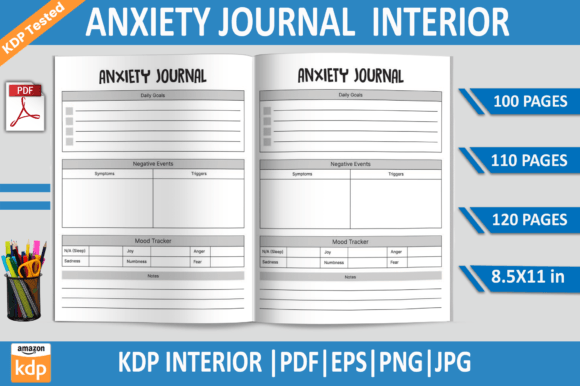
In practical terms, this product is a collection of digital files formatted for an 8.5×11-inch journal interior. It includes PDF, EPS, PNG, and JPG versions, with three different page counts: 100, 110, and 120 pages. All files are set to 300 DPI, created with no bleed, and have been tested on Amazon KDP for compatibility. The Anxuiety Journal KDP Interior Template is marketed as an instant download, meaning you can acquire and start using it immediately after purchase. Editable EPS files and transparent-background PNGs add a layer of flexibility, while high-resolution JPGs offer a familiar format for quick previews or additional customization.
Because it is KDP-tested, the files are meant to pass Amazon’s automated checks for print quality issues, reducing the chance of rejection due to formatting errors. This alone can save hours of trial and error for someone unfamiliar with KDP’s technical requirements.
Why Self-Publishers Look at This Template
Several practical motivations push a publisher toward a pre-made interior. Time is usually the biggest factor. Designing 100+ pages individually, ensuring consistent margins, and exporting print-ready PDFs demands design knowledge and patience. A Anxuiety Journal KDP Interior Template removes that work. If you have a journal idea but lack the skills or software to build an interior, a download-ready setup lets you focus on cover design, keywords, and marketing instead.
Another driver is risk reduction. By using files that have already passed KDP’s upload and review process, you lower the chance of technical errors—gutter shifts, insufficient margins, or incorrect color profiles—that often trip up new publishers. This kind of assurance appeals to anyone who wants a smoother first publishing experience or plans to release multiple interiors quickly.
Cost control also plays a role. Custom interior design can cost dozens or hundreds of dollars. A one-time purchase of a tested template may offer a more affordable entry point, especially when you are testing niche viability before investing heavily.
Key Benefits That Stand Out
- Multiple page count options: Having 100-, 110-, and 120-page versions allows you to adjust the final book’s thickness or price point without manually adding or deleting pages.
- Bleed-free design: A no-bleed interior simplifies formatting and ensures content stays well within safe zones, which is especially helpful for journals with borders or prompts near the edge.
- Editable source files: The inclusion of EPS files means you can tweak the design in Adobe Illustrator or other vector software if you want to add a logo, adjust line spacing, or modify elements.
- Transparent PNGs: Individual page PNGs with transparent backgrounds let you layer elements in other design tools without a white box around graphics.
- Instant accessibility: Because it’s a digital download, there is no waiting on physical media, and you can start working as soon as the transaction completes.
Tradeoffs and Important Considerations
No template is universally perfect. While the Anxuiety Journal KDP Interior Template solves certain problems, it introduces others worth weighing.
Creative uniqueness: A commercially available template can be purchased by many users. If too many publishers upload an identical interior with only a different cover, readers may notice similarity across listings. This can make differentiation harder in competitive subcategories. Consider whether your target audience values originality enough that a fully custom interior would pay off.
Fixed structure and prompts: The template is for an anxiety journal, which implies a certain layout—likely guided prompts, mood trackers, or reflective writing spaces. If those prompts do not match your audience’s specific needs (e.g., clinically oriented CBT exercises versus gratitude-focused journaling), you might need to edit the EPS file, which requires design software and skills. Not every buyer realizes upfront that “editable” only matters if they have the tools to edit.
Format assumptions: The 8.5×11-inch size is standard for notebooks, but it may not be ideal for every audience. A compact 6×9-inch format sometimes performs better for journals meant to be carried around. If your niche prefers a smaller size, this template would not fit without significant modification—effectively starting from scratch.
Page count limitations: While three counts are provided, some anxiety journals work best with 90 pages of weekly check-ins or 200 pages of daily entries. If your ideal structure falls outside the given options, you must adapt by duplicating or removing pages, which can disrupt page-numbering or section continuity.
No content guidance: The package likely contains the pages themselves, not instructions on how to structure a compelling anxiety journal. For new publishers, understanding what kind of prompts convert browsers into buyers is part of the research. The template handles layout, not content strategy.
When the Anxuiety Journal KDP Interior Template Is a Strong Fit
This template shines in specific publishing scenarios. If you are new to KDP and want to publish your first journal without learning InDesign or Photoshop, the pre-tested files dramatically lower the barrier. You simply upload, set your cover, and go live—often within the same day the product is purchased.
It also suits bulk publishers who release multiple variations of the same journal type. Changing an accent color, adjusting the cover, and quickly swapping page counts allows for rapid market testing. If anxiety journals in your niche currently sell well, this template lets you enter the market quickly with a professionally formatted interior.
Another strong fit is when you have a built-in audience—such as a therapy practice, coaching business, or wellness brand—and you need a clean, reliable interior to publish a companion journal. The Anxuiety Journal KDP Interior Template can serve as a white-label foundation that you personalize through the cover and any supplementary content, as long as the provided prompts align with your methodology.
When Alternatives May Serve You Better
There are times when a pre-made template is not the optimal choice. If you have a very clear vision for a unique journal—specific mood scales, evidence-based interventions, or integrated artwork—a custom-designed interior will likely serve readers better. The generic structure of a template may force compromises that weaken the final product’s appeal.
If you plan to publish many different journal themes, learning to create interiors yourself using tools like Canva or Affinity Publisher might be a more scalable long-term investment. While there is a learning curve, once you master the basics, you can produce unlimited variations without recurring template costs and with full control over design and dimenions.
For publishers targeting markets where a specific interior size or landscape orientation is expected, a mismatch with the 8.5×11 portrait format becomes a dealbreaker. Always validate what your target customers are actually buying before committing to a template.
Evaluating Technical Quality and KDP Compatibility
Because the seller notes the files have been tested on Amazon KDP, this typically means the PDFs pass the automated pre-flight checks without triggering margin, DPI, or size warnings. To be safe, always run your own preview after upload. Slight variations in Amazon’s systems over time can cause unexpected errors, and the quickest fix is to open the file in the recommended software, re-export, and re-upload. The EPS and PNG variants are helpful here; if the PDF ever fails, you can take the vector or raster source and re-export to meet current specifications.
300 DPI resolution is the standard for print quality, ensuring crisp lines and text. The no-bleed setting means the interior does not extend to the page edge, so all content stays within the trim line. This reduces the risk of important journal prompts being cut off during printing.
Practical Steps Before and After Purchase
If you are considering the Anxuiety Journal KDP Interior Template, go through these checkpoints to avoid frustration later:
- Confirm your niche: Research top-selling anxiety journals. Look at reviews to understand what buyers value—prompt variety, page count, size, and layout tone.
- Review your software access: Even if you only need the PDF files, you may want to open the EPS to confirm compatibility. Adobe Illustrator is required for full editing; Inkscape or similar free tools may work but can introduce issues.
- Test upload immediately: Before designing a cover, upload the PDF to KDP and run the previewer. Check for any oddities, especially around page numbers or section headers if present.
- Plan your cover to complement: A compelling cover can significantly differentiate an otherwise template-based interior. Invest time in a cover that speaks directly to your audience’s emotional needs.
- Consider content differentiation: If the template allows text editing, tweak a few prompts to better reflect your unique angle. Even small changes can make the journal feel more bespoke.
Balancing Speed and Originality
The primary tension with any pre-made KDP interior is speed versus distinctiveness. The Anxuiety Journal KDP Interior Template offers a fast track to a publication-ready book. For many creators, speed matters more than absolute originality, especially when starting out or validating an idea. If the market already has multiple successful but similar journals, there is room for another entry, provided your marketing, cover, and niche targeting are sharp.
At the same time, recognize that low-content publishing is maturing. Templates that were once rare are now widely accessible. To stand out, you may need to combine the template with thoughtful customization, authentic branding, or a tightly focused audience segment—such as an anxiety journal specifically for new parents, teens, or professionals in high-stress fields. The template becomes a starting point, not the finished product.
Making a Decision That Aligns With Your Goals
Ask yourself what you value most: a rapid, low-risk launch or a fully original product that can command higher perceived value. If you lean toward speed and low upfront effort, a Anxuiety Journal KDP Interior Template eliminates the design bottleneck and lets you test the waters quickly. If long-term brand building and deep audience connection matter more, consider whether you have the resources to develop a custom interior—or at least modify an existing template significantly.
Also factor in your ongoing publishing plans. If this is a one-off project, a template makes financial sense. If you plan to release ten journals this year, gaining interior design skills may repay you many times over. The template occupies a useful middle ground: it is a practical shortcut for certain publishing paths, but not a universal solution.
Ultimately, the Anxuiety Journal KDP Interior Template is a tool that works best when your priorities align with its strengths—tested compatibility, multiple file formats, and instant readiness. By weighing those strengths against the need for customization and differentiation, you can make a clear-headed choice that supports your publishing objectives without unnecessary cost or complication.