500 Anxiety Solution Affirmations KDP: A Strategic Resource for Intentional Calm and Consistent Growth
Most people approach anxiety relief the same way they approach fast food—they want something quick, cheap, and immediately satisfying. But anyone who has spent years navigating the demands of entrepreneurship, client work, or content creation knows that surface-level tactics rarely produce durable results. The 500 Anxiety Solution Affirmations KDP collection wasn’t designed as a magic bullet. It was built as a structural asset—a thoughtfully assembled library of statements that, when integrated into a deliberate practice, can help rewire reactive thinking patterns and support clearer decision-making over time. The companion Canva interior turns that asset into something moldable, not static.
Whether you’re a publisher looking to expand your low-content book catalog, a coach seeking customizable client resources, or a professional building a personal resilience system, the strategic potential of these affirmations sits in how you deploy them—not in the volume of words alone.
What This Collection Actually Contains—and Why Structure Matters More Than Quantity
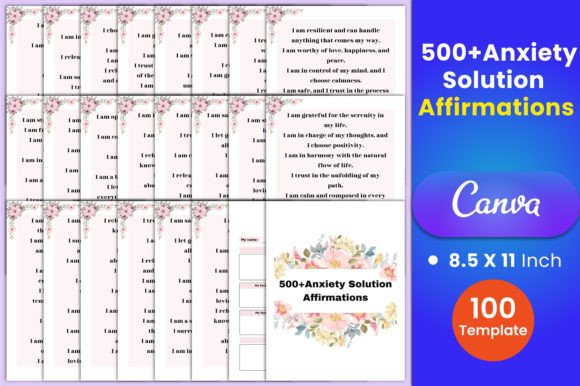
The bundle includes more than a list of phrases. You receive a ready-to-upload PDF, high-resolution JPG and PNG files, and an editable Canva link that gives you full control over the interior design. All 100 pages are formatted at a clean 8.5x11 inches with no bleed and 300 DPI—specs that matter if you’ve ever dealt with KDP’s technical rejection emails. The package also includes practical support pages: a “Belongs to” page, an “All About Me” section, notes pages, and a thank-you file. These aren’t decorative extras; they create a complete user journey for any end reader.
But design polish means nothing if the content lacks strategic depth. The 500 affirmations were curated to address multiple dimensions of anxiety—physical tension, racing thoughts, anticipatory worry, self-doubt, and avoidance loops. They avoid the toxic positivity trap. You won’t find empty slogans like “Good vibes only.” Instead, you’ll encounter statements that acknowledge difficulty while opening a door to reframing: “I notice my anxiety without letting it steer the decision,” or “My mind can learn new patterns, one repetition at a time.” This nuance is what makes the resource useful for adults who have outgrown platitudes.
Why an Editable Canva Interior Changes the Game
Static PDFs have their place, but the real leverage lives inside the Canva link. You can adjust fonts, colors, layouts, and backgrounds to align with a personal brand, a coaching methodology, or a client’s aesthetic preferences. Imagine a therapist incorporating these affirmations into custom worksheets, or a YouTuber creating a branded companion journal for their audience. The editable interior transforms a single product into a versatile system—something you can repurpose for lead magnets, course bonuses, membership libraries, or paperback books under your own imprint.
From a business perspective, this flexibility reduces the cost of content creation. You’re not just buying affirmations; you’re buying a foundation that you can iterate on for years without starting from scratch. That’s a rare advantage in a market flooded with one-and-done digital downloads.
When to Use Affirmations—and When They Become Counterproductive
There’s a quiet danger in treating affirmations like wallpaper. If you read a statement once and walk away, you’ve engaged in a ritual of hope, not a practice of transformation. The brain doesn’t overwrite years of anxious wiring because you repeated a sentence three times. Real change requires consistent, context-aware repetition paired with small behavioral experiments. The 500 Anxiety Solution Affirmations KDP resource works best when it becomes part of a sequenced routine: maybe a morning priming session, a midday reset, and an evening reflection tied to a specific trigger.
But context also matters. Using an affirmation like “I release what I cannot control” right after a genuine loss might feel invalidating. A more strategic approach is to match the affirmation to the specific flavor of anxiety present. A racing mind before a pitch needs a different statement than the quiet dread that creeps in at 2 a.m. Having 500 options lets you build a personalized inventory—a go-to set for high-stakes moments, another for relationship tension, another for financial stress. This kind of intentional categorization is where the product’s real value unfolds.
The Risk of Using Affirmations Without Clear Goals
If you don’t define what “less anxiety” looks like in observable terms, you can’t measure whether any tool is helping. A strategist’s approach might involve setting a 30-day benchmark: after integrating these affirmations into a daily journaling habit, do you notice shorter recovery times after stress spikes? Are you initiating difficult conversations with less physiological arousal? Without that lens, you risk floating in a sea of nice words with no anchor to reality.
For publishers, the same principle applies. Uploading a blank journal with scattered affirmations might generate sales for a week, but it won’t build a reputation. The 500 Anxiety Solution Affirmations Canva interior gives you the means to design a more thoughtful product—one that guides the reader through a structured process: identify your triggers, select relevant affirmations, track somatic changes, review weekly. Books that teach a method, not just deliver content, earn better reviews and lower return rates.
Practical Integration: Building a System Around the Resource
Let’s move from theory to execution. Suppose you’re a freelancer whose anxiety spikes every time an invoice goes unpaid. You could pull ten affirmations from the collection that address financial insecurity and worthiness. Then, you design a simple Canva template—using the included link—that places one affirmation at the top of a daily client communication log. Each time you send a follow-up email, you read the affirmation first. Over weeks, the pairing rewires the association: the act of advocating for your value becomes linked with a calm, grounded statement rather than a cortisol surge.
This example illustrates a deeper principle: affirmations work best when anchored to a specific action or environmental cue. The editable Canva format makes that possible because you can print the affirmations as cards, embed them in digital planners, or create mobile wallpapers. The medium shapes the message. A list trapped inside a PDF you never open is noise; a strategic placement in your physical or digital workspace turns it into a consistent nudge.
Use Cases Across Different Roles
- Coaches and therapists: Customize affirmation cards for clients dealing with social anxiety, perfectionism, or burnout. Brand them with your practice logo and use them as session takeaways.
- Course creators: Incorporate daily affirmation exercises into a module on mindset, with printable worksheets designed from the Canva template.
- Bloggers and content creators: Extract a series of affirmations for a 30-day challenge, turning each into a visually engaging social media graphic.
- KDP publishers: Create a unique companion workbook by mixing affirmations with guided prompts, habit trackers, and reflection pages—all inside one polished interior.
- Corporate wellness coordinators: Adapt the affirmations into a weekly email series or a printed desk calendar that supports psychological safety without crossing into clinical advice.
Design Choices That Influence Cognitive Absorption
The interior’s 8.5x11 size with no bleed might seem like a technical detail, but it affects how a reader interacts with the content. A larger page allows for generous white space, which research suggests can reduce cognitive load. When you design with the Canva link, consider leaving breathing room around each affirmation. Clustering dozens of statements on one page may overwhelm users who already feel mentally cluttered. A single, well-placed affirmation per page, paired with a subtle visual element, can signal importance and invite slower, deeper processing.
Font psychology also plays a role. Serif fonts can evoke a sense of tradition and stability, while clean sans-serif fonts feel modern and direct. Since you have full editing capabilities, you can test which typographic tone resonates with your target audience. A therapist might choose a warm, rounded typeface; a leadership coach might prefer something crisp and authoritative. These micro-decisions compound to create a product that feels intentional, not generic.
Long-Term Value: From One-Time Purchase to Evergreen Asset
Most digital products have a short half-life. They’re downloaded, briefly scanned, and forgotten. The 500 Anxiety Solution Affirmations KDP bundle resists that pattern because it’s a substrate, not a finished solution. Each time you open the Canva link to adapt the content for a new use case, you extend its life. A single purchase could yield a paperback journal, a digital course bonus, a client resource library, a virtual summit freebie, and a personal daily practice—all from the same core material.
This multi-use nature makes the product particularly appealing for those who think in systems rather than isolated tasks. An entrepreneur launching a wellness brand could start with a simple affirmation journal on KDP. After testing market response, they might expand into a card deck, a mobile app mockup, or a paid membership offering. The affirmations become the consistent thread, and the editable Canva file eliminates the need to license new artwork or copy for each iteration.
Maintaining Ethical Integrity When Using Pre-Written Content
Legitimate questions arise about authenticity when using curated affirmations. If you’re a coach, you might wonder whether your clients will sense that the statements aren’t “yours.” The answer lies in how you present and contextualize them. Simply handing someone a printed list feels transactional. But discussing why a particular affirmation resonated with you, or how you’ve adapted it to a specific challenge, transforms a commodity into a meaningful exchange. Transparency builds trust. You can even note that the affirmations were carefully selected from a tested collection, which signals that you value quality over ego.
For publishers, avoid deceptive marketing language. Calling the book “My Original Affirmations” when you used a licensed resource would erode credibility. Instead, position it as a curated guide—a tool designed to save readers hours of piecing together scattered advice. This honest framing aligns with E-E-A-T principles and builds a more sustainable brand.
Making Better Decisions with a Curated Affirmation Library
Professionals who operate in high-uncertainty environments—entrepreneurs, leaders, creatives—often face decision fatigue. The brain’s threat-detection system can perceive ambiguous situations as dangerous, spilling adrenaline into the bloodstream and narrowing cognitive bandwidth. In those moments, having a preselected catalogue of anxiety-soothing statements can act as a cognitive off-ramp. Instead of spiraling, you can grab a relevant affirmation and use it to interrupt the sympathetic nervous system activation. This isn’t magical thinking; it’s a form of attentional training that has parallels in cognitive-behavioral and mindfulness-based interventions.
The key is to curate your personal shortlist before the crisis hits. Spend an afternoon with the 500 Anxiety Solution Affirmations Canva interior, reading through the statements and selecting those that land with a visceral sense of relief. Group them by context. Print them onto a single sheet you can keep in a desk drawer. When stress strikes, you’re not searching; you’re executing a pre-planned response. That’s strategy, not impulse.
Planning for Scalability: Growing Your Offering Over Time
If you’re a publisher or creator, consider how the affirmations can seed a larger content ecosystem. For instance, a “Morning Calm” affirmation journal could later branch into an evening gratitude companion. An affirmation-based card deck could become a workshop series. Because you own the editable Canva link, you can maintain visual consistency across all these products, building a recognizable brand without hiring a designer for each launch.
Additionally, the notes pages and “All About Me” section in the original template aren’t trivial. They allow end users to personalize the experience—something that enhances perceived value and reduces return rates. When you adapt the interior, preserve or even expand these interactive elements. A book that invites the reader to reflect, list their most effective affirmations, and track their anxiety patterns becomes a workbook, not just a reading experience. Workbooks command higher price points and foster deeper engagement.
Final Observations Without a Conclusion Label
No collection of words, no matter how well-curated, can substitute for professional mental health care when that’s needed. But for the daily friction of modern life—the low-grade hum of worry that saps creativity and slows decision-making—a strategic affirmation practice can be a powerful piece of your cognitive toolkit. The 500 Anxiety Solution Affirmations KDP product, with its editable Canva interior, offers a scaffold for that practice. It respects your ability to customize, iterate, and apply the material in ways that align with specific goals, whether those are personal resilience, client outcomes, or publishing revenue.
The real measure of this resource isn’t the file size or the number of pages. It’s what you build with it. A printed journal that lives on a nightstand. A coaching tool that sparks breakthroughs. A series of digital products that pay dividends for years. The choice to move from passive consumption to active, intentional deployment is where the work—and the reward—begins.